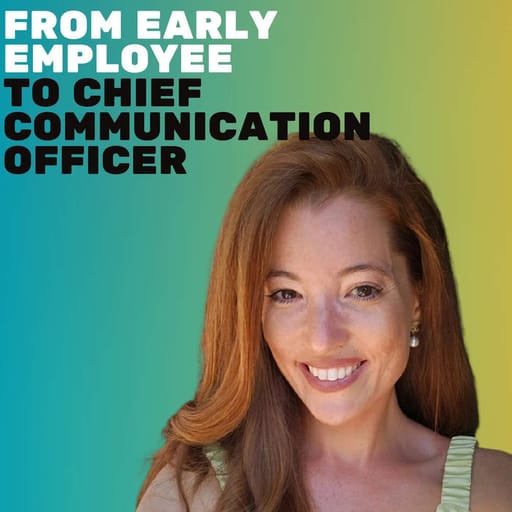
Transcript 0:00 Maybe it was about a year or two ago that we had a company come to us, and they, they had all these big plans for what they wanted to achieve, and the guy said to me, "You know what? 0:07 We don't wanna work with you because if you're not gonna go out and bat, bat for us, we don't wanna work with a company like yours." 0:12 He said, "Because this other firm told us that they can definitely get us these placements." 0:16 And I said, "Listen, I know an editor at one of the biggest tech publications, and his wife is in PR, and if she's not getting stories through her husband being the editor [chuckles] of this publication, then there's no way that we can guaran-- anyone can guarantee you coverage." 0:29 So it's honestly a huge red flag, and I wish more companies would know this. Welcome to a new episode of The Science Marketer Podcast. 0:37 In today's episode, we are diving into how biotech startups can scale their communications all the way to an IPO. 0:45 My guest today is Arielle Kramer, founder of Clover Communication, a boutique agency specializing in marketing and PR for life sciences and healthcare startups. 0:54 Before launching her agency, Arielle was the chief communication of Biqle, where she joined as one of the first employees and helped shape the company's messaging through rapid growth, acquisition, and eventually an IPO. 1:07 In this conversation, we'll explore the key communication strategies that helped Biqle scale and go public, how biotech companies can build their presence organically, and how to build your career as a communication manager. 1:20 Hi, Arielle. Welcome to The Science Marketer Podcast. Thank you so much for having me, Joachim. You joined the company Biqle when it was just seven people, so in the early days. 1:29 Could you first describe briefly what the company is doing and also then what were the biggest communication challenges in the early days? Absolutely. 1:38 So when I initially started with the company, um, back in two thousand and sixteen, it was actually known as Cellink, and it was the first company in the world to ever produce a bioink to sell, and it turned into a 3D bioprinting company, so they produced bioprinters, bioinks, and other, you know, materials and things that scientists could use when it came to 3D bioprinting. 1:59 Um, so I would say the biggest challenge initially was getting people to understand the capabilities of bioprinting. Um, what... Was it sci-fi? Was it real? Like, what was actually happening in the labs? 2:09 How are people actually using these in real-world applications, and what areas were they applicable to when it comes to regenerative medicine, precision medicine? 2:16 And so that was really a challenge in the beginning, to communicate what was currently happening and what the possibilities were. Can you maybe describe what you did to, to help with this? Absolutely. 2:26 So in the beginning, I mean, I was certainly new to the field. Um, I had started a, you know, PR consultancy just myself back in the day, um, and had dabbled within healthcare and biotech. 2:36 But when I got into the bioprinting space, it was really interesting to see how this machine could possibly, you know, print a heart valve. 2:43 It was able to print all these various things, but people thought people were printing full-size organs, which obviously was not happening at the time. 2:49 So what we had to do was really find out which scientists were making progress in this field and find different peer-reviewed papers, um, just different labs throughout the world that were actually using this technology, obviously not using the printers currently that they had, but were making their own printers per se or had other printers from companies that had been doing it for quite some time and focusing on publishing their research and their findings to kind of help the market understand what exactly was happening in this field and what the potentials were. 3:17 So we were partnering with, from a content perspective, with various scientists around the world. We actually had something called the Global Ambassador Program, where all we would do was exchange research. 3:27 We would share findings. We would post their different case studies, um, if they had them. And it was a really interesting way to kind of figure out what everybody else was doing. 3:35 They would upload their files for how they were printing different things, um, and that was really a great way to kind of foster a community and just build out a community within the bioprinting space. 3:45 So, you know, there was transparency on what others were working on, and that was really a great way to make the market, investors, um, the general public, you know, media really understand what the opportunity was in that space. 3:57 Yeah, so you started really from the, the, the scientific community and then expanded- Correct... maybe to a general audience there. Okay. Correct. Makes sense. So that's basically what we... 4:07 So we found a lot of articles, um, a lot of, you know, would just dig in, you know, PubMed and see who was really printing in this field. 4:13 We even had a, our small podcast for a while that I actually hosted, just interviewing different scientists as to what they were working on because we really wanted to understand what were the challenges, what were they doing, and really kind of present that to the world for them to understand what bioprinting, you know, what, what that even was. 4:30 People are, "Wait, is that printing with cells?" 4:31 They've heard of 3D printing, but really they wanted to see firsthand in the lab what people were printing and what kind of real progress was being made versus what was, you know, science fiction to those who didn't really understand. 4:42 And did the role of communication evolve as the c- as the company grew? Absolutely. 4:48 So, you know, shortly after we IPO'd, when I joined, shortly, you know, so several months plus a year later, and it was really an interesting way to see how we were communicating because before it was-- we were able to be more free in our content, obviously, certainly able to kind of dabble in different types of kind of like show behind the scenes. 5:06 We were able to kind of out, you know, blog. We were interviewing various folks, which we continue to do. But obviously post-IPO, you really need to be careful about what you put out to make sure that those are... 5:17 their... people are not being confused between what we're doing versus what other folks are doing in the space. 5:21 So really wanted to make sure that we made that clear what we were doing in-house, what our customers were doing versus what those outside, you know, in other wheels were doing, uh, in the space and in their labs if they weren't using our products but still bioprinting. 5:33 So made sure, wanted to make that very clear, um, that we were still supporting these scientists, but they weren't necessarily... it wasn't our work per se, um, we were presenting. 5:41 Yeah, and I guess, um, yeah, there are some legal scrutiny that comes with the IPO as well, so you have to maybe like be very strict- Yes... on what you put out, right?Absolutely. 5:51 And any time there is something to share, you have to make sure that you put a press release before the general market finds out about it, and just making sure that you comply with these various rules. 5:59 And being that I, I'm Americans living in Sweden at the time, working with... They were listed on Nasdaq First North initially. So it was-- and it, it is different way of financing in Sweden. 6:08 A lot of companies take this path relatively early. 6:11 Um, so that was really interesting seeing other s- you know, small cap companies do this, um, and just kind of figure out ways to present our story and our findings and everything that was happening in the company in a way that we could obviously get it out to the public, but still not overpromise and overdeliver on the science of what was actually happening. 6:28 I think a lot of companies, uh, also prepare for the IPO and also have to prepare the, the communication strategy. 6:35 So what are some of the biggest mistakes startups can, can make before the IP- the IPO or when they transition? 6:43 I think that it's so, you know, so basically, so I was in the, obviously, comms marketing, and we did have obviously a finance department that was really kind of sorting out all the legalities and everything behind launching the IPO. 6:54 But I think that it's making sure that you don't overpromise on what this means for the market. 6:59 Um, and I think that in general, a lot of biotech and life science companies, they prematurely produce data, or they make claims that their, you know, that their science works one way, but it really works another. 7:10 So really making sure that it's very clear, like, why you're IPO-ing, what you're currently offering the market in terms of products and services, and making that very crisp so everyone kind of understands where your company is, what stage they're currently in, and where it's headed. 7:25 And obviously beyond that, after IPO, you have to be super careful about what you put out in terms of how, you know, what you're working on and what products are coming to market. Because the market reacts immediately. 7:35 Like, if something happens, uh, the, the stock- Correct...just goes down. 7:39 So when you reached out to me, uh, to be on the podcast, you told me about this concept of creating, uh, an education hub for, for companies, uh, especially in biotech. 7:50 So you, you believe companies should become kind of a, a news or educational hub for their industry. What does this mean in practice for you? 7:59 So I think especially for startups in this space, it's really educating the market as to how your product is different than anybody else's. But nobody wants to look at a feed full of self-promotional content, right? 8:09 Nobody cares, like, "Oh, here's our product, here's what we do." 8:12 That's fine if you sprinkle in that content, but I think it's really a missed opportunity if you're not educating the market on the specific problem that you're solving. 8:20 So by doing that, I mean pulling industry articles related to, for example, let's say you're in, uh, AI d- drug discovery in rare diseases. 8:28 Knowing how these rare diseases are, you know, wait, how they're prevalent, you know, in certain communities, for example. What are the missed opportunities in this space? 8:36 How come certain patients are not reacting to medications, or why are we having such a problem finding these medications? 8:41 And then really applying that to your content strategy and the technology to really show, like, here's how we're doing it differently. 8:48 And I think that providing, you know, news articles, like I said, research again, I'm, I'm really a fan of showcasing others' research because they're doing the talking for you, right? 8:56 The companies that don't have that research yet, 'cause obviously, as we know in biotech and life science, it takes a long time to produce data. 9:03 So until you have that data, I think it's really important to see what else is out there that you can kind of just shine a spotlight to. Like, here's why we're doing what we do. 9:11 Look at this research paper that came out of XYZ institution, you know, university, whatever, you know. C- even you can promote other companies' work. 9:18 Um, as long as they're not a competitor, I think a lot of companies are open to doing that, just to prove time and time again why you have a product market fit. So I think that that's really important to do that. 9:28 And how does it look in, in practice? Like, is it something you, you send through newsletters, through social media? Like, how do you create this, this hub, basically? Yeah. So I think it's a mix of... 9:39 So LinkedIn is really big within this community. I know the other platforms, depending on your target audience, can also be used. Um, but I think LinkedIn was a really big one for me, for all of our clients. 9:49 It's really big to use to educate investors, potential partners, talent, obviously, and making sure that we kind of do a sprinkle of industry news. 9:56 So just pulling out all of the industry news that's happening and what's specifically applicable to the company that we're working with. 10:03 Um, we also like to show patient stories if that's something, even though sometimes these products are so far from reaching the patient. But really showing that human element to a company, I think, is really important. 10:12 So for example, we work with an ovarian cancer diagnostic company, and while that's quite a bit far away from obviously being FDA-approved, there's a lot of data that's coming out right now and everything that's happening in that, i-in, within, internally within the company. 10:25 But showing firsthand the problem and interviewing patients as to their experience with lacking early detection and how it affected their cancer journey was really crucial to others understanding, wow, this is actually a problem. 10:36 Because unless you know somebody that's been affected by that specific cancer, you may not understand the difficulties with diagnosing ovarian cancer and really understanding the missed opportunity in the space for not having such a test. 10:48 Do you have example of companies, uh, who have done this? Yeah. Oh, yes, aside from my own clients, um, have you heard of EveryCare before? 10:55 Well, he, uh, so Dave, I, I am gonna butcher his last name, but this, he's a scientist, went to UPenn, and he actually cured his own disease using repurposed drugs. 11:06 Really fascinating story, and he does a lot of content kind of educating the market, sharing real-world patient stories, and I think he's done such a good job. 11:15 His team, him and his team have done an amazing job really bringing that first-person narrative to life and educating the market on why their company, what, why what they're doing is so important. 11:25 So love seeing content like that, um, and really showing, you know, teaches industry articles. You know, they do these personalized videos. They do interviews. 11:32 So a, a combination of all those things I think is really a nice way to have content that's not so self-promotional, but really shows, it addresses the problems that you're trying to solve. 11:42 Yeah, that's, that's fascinating. I mean, there is also this, uh, question of like, as you said, like the personal side of the story. 11:48 So do you think also, like this kind of communication is more effective when it's coming maybe from the, the executives or CEO or the- Absolutely. I think tying that personal connection is so important. 11:58 I think that humanizing... So for example, in, in biotech, right, everything seems like big pharma, scary. 12:04 You n- you know, you have these drugs come to market, but you don't really know who's producing them, and obviously there's skepticism regardless of the political climate as to a-anything that's happening in healthcare and bio- and, you know, biotech, right? 12:16 So I think that bringing that personal behind-the-stage look at what's really happening in the company and the personal, like, why does this person wanna start this company?Um, and we've met so many founders that really do have that personal side either they were affected by a disease, a family member was affected. 12:30 It's something personal to them because of whatever reason that may be. 12:33 I think bringing that story to life is so important and having them share their perspectives and industry knowledge, I think it goes a long way as opposed to having this generic content, uh, that you're just showing your product, here's what we do, but really bringing that story to life, um, that comes from a place of passion and also a drive to want to make a difference. 12:51 Yeah, makes sense. What are the common mistakes to, to avoid with this kind of strategy? 12:57 I think that a lot of companies worry when they don't have data fast enough because every investor, right, everyone's like, "We want to see data, we want to see data. We want to see sales." 13:05 But obviously that's going to take some time when you're in such a regulated field. So I think that it's really important to show these even like hypothetical user studies, right? 13:15 Or you can have like, "Here's how our product can be used," and show a case study. 13:19 Or if you're not allowed to name a specific client that you're working with, for example, you can at least show like, "We helped, uh, an institution in XYZ area do this, do this, and this," um, as a way just to kind of show, to kind of paint a picture of how you can actually work with a specific company and how your product's being used. 13:36 But I think that some companies make the mistake of over-promising, um, and giving these timeline projections that aren't realistic, and then therefore nobody-- if you're an actual true investor in the space and understand the science, nobody's going to take you seriously. 13:49 If you say, "If I came out in the bioprinting company and said, in three years I'm going to be printing hearts and we're going to replace organs transplants with these bioprinted hearts," people would think I was absolutely crazy, right? 13:59 So I think that I see a lot of companies unfortunately kind of jumping the gun when they get nervous that they're not getting investment in time and making claims that they later maybe regret, regret making, or they say that they want to raise XYZ money, you know, money, and the next thing you know they've only raised half of it. 14:16 And then it just kind of looks silly and you lose trust in the market if you make claims and statements that don't actually end up, you know, coming to fruition. So I think it's something to really be wary of. 14:24 I'd rather be on the fence, uh, about something and take a step back and make sure that I'm, you know, I'm telling clients, "Please, you know, only share information that you know is a hundred percent factually accurate, and don't give timelines unless you're a thousand percent certain that you're able to meet those timelines." 14:40 Yeah, that's interesting because you've worked on both sides of the Atlantic- Yes...in Europe [chuckles] and in US, and I think, um, US they tend-- I mean, startup founders they tend to say like, um, "Fake it until you make it." 14:53 Yes. In biotech it's maybe a bit less- I think the startup world you can do that. I don't think biotech is one of them. Okay, good. Just to confirm. 15:01 But no, I have seen a difference between European companies are way, you know, they're way more reserved and they don't want to over make these promises. 15:09 So it's almost like we have to push the clients like, "Oh no, you really do have good research. This is a good time to put this out now." Whereas Americans are like, "Let's just put it out." 15:16 Uh, and I have not actually found that so much in the biotech community. I found it more when I used to work in tech where they wanted to release a product early and say it had XYZ functions and then it actually didn't. 15:27 So I would say that for sure the scientific community is way, uh, more reserved when it comes to sharing this information. But I, of course, you know, we see with Theranos for example, right? Yeah. Right. Yeah. 15:37 Um, people are not as reserved when it comes to sharing, uh, certain things and making certain promises. Okay. Um, so let's talk a bit about your, your activity now. 15:47 So your, your agency, Clover Communications- Yes...is, uh, specializing in, in PR for biotech companies. 15:53 And one of the question I think many companies face, I think you, you just mentioned it actually, like when they don't have data to share, when they don't have a news flow to share, how should they approach this period and especially like with, uh, uh, media relationship, like what can they do in this- Absolutely...type of, uh, events? 16:13 Yes. So I think thought-- I hate the word thought leadership, but writing these industry expert pieces, I think are really important to kind of stake your, you know, claim in a certain space. 16:23 And so for example, we have a client in the antibody drug discovery space who will be producing data shortly, but they-- founder particularly wrote an article about how to get from, you know, from place A to place B using this type of technology. 16:38 And that was a way for that company to obviously talk about the current hurdles in their market, um, without having to talk about data, without actually having to talk about what they're doing as a company. 16:48 But as a scientist, he's had thirty years of experience just showing that level of expertise, because obviously that instills confidence in the market, in your investors, board members, and potential partners, if you know that somebody really understands the technology that they're working on and the space where there's room for innovation. 17:04 So I think that writing these thought leadership pieces in industry trade publications is really important and even contributing to larger conversations. 17:10 Uh, so for example, when you see an article like Stat News just came out with an article the other week that was a bit skeptical of every company who's claiming to use AI for drug development. 17:18 I don't know if you saw this article. 17:20 Um, I'm not gonna name any companies, but specifically this was a great opportunity for other companies in this space to kind of come out and say, "Hey, here are our thoughts on this and here's what we're doing differently," without being self-promotional though, right? 17:32 Just showing that they really understand the, the current gaps within the drug development space and, you know, using that buzzword AI, every company's using that. We use AI for X, you know, this and that. 17:42 Um, but it's really important I think as a scientist and when you, when you're trying to fundraise in this space to really show your investors that you understand and that you're not producing fluff, right? 17:51 You're not, you're not making claims that you can't stand by. So I think that that's a really important way as a CEO build, build visibility and as a company build visibility. 18:01 And also have your investors do the talking for you. So we do these things that, you know, in, in the media where we also bring in investors to conversations in an article. 18:08 So we offer up different perspectives for the media. It's like, "Oh, you, you know, if you wanna talk to the CEO, here's-- talk to John Smith," for example. 18:15 But we can also offer you a perspective from their investor as to why this company's different, because it's better if others do the talking for you rather than you have to continually sell yourself. 18:23 So whether that's board members, you know, scientific advisors, investors, whoever that may be, giving that additional credibility I think is so important, especially in these early stages.Do you try to push the, the CEO or an executive to write a piece, or like how does it work? 18:38 Is it's coming from you first? Like, what's the dynamic here? 18:41 So we, we do suggest certain topics, but I would say depending on what the topic is, whether if, if the CEO has scientific knowledge, absolutely, they're the go-to person. 18:50 But let's say the CEO is actually like a business development, you know, their background is business development and operating, whereas their chief science officer is clearly more of a scientific background, we really choose the person accordingly just for that added credibility. 19:02 I think that there's certain e- no matter how advanced you are in this space as a business executive, it's the, the level of conversation and the credibility in an early-stage startup is never gonna be the same as that as a s- like a chief science officer who has spent the last twenty years in the lab and actually firsthand doing the research. 19:20 Uh, and what comes first, like the ID or the, the media placement? 19:24 So meaning like do you have a specific media in mind or trade publication in mind, and then you build something for them, or is it the opposite, like you build a pitch and then you go around? I think it really depends. 19:36 I would say specifically depending on where the company is in their journey. So let's say a company is looking to fundraise, um, that would be one publication versus another. 19:46 If they're looking for industry partners and for talent, then maybe we would go to the different publication. 19:51 So I would say it's very much dependent on the goals of the company and what audience they're looking to get in front of. Yeah, makes sense. Okay. 19:58 From your exper-experience working with, uh, with startups, what are the biggest misconceptions founders have about PR and, and communication in general? I would say that they think it's a quick fix. 20:10 We've had companies come in and they're like, "I wanna be in The New York Times, I need to be in Forbes, I wanna be everywhere. 20:16 I, I need to raise fifty million dollars, and I need to do it in like the next three to six months." I, I mean, and seriously, I've had these conversations, and that's, that's not really how PR works. 20:25 It's definitely a long game reputation building. If you wanna buy paid ads, that's completely different. That's not what we do. 20:31 It's really, you know, building that credibility, establishing that trust, and just generating brand awareness. Um, and there are some companies that we've worked with that really understand that. 20:39 So one of the first clients... So I'll backtrack a bit here. So about, God, 2013, I initially started Clover Communications, but it was just me as a consultant. 20:49 And then after several years, then I decided to bring my partner in, and there's, you know, our boutique agency, so he's an engineer by trade. 20:55 Um, so we have different, you know, different levels of expertise when it comes to explaining scientific topics, and we work with industry experts within the field, not only, you know, senior level PhDs, um, those that really understand the market. 21:06 But what I'm going back to here is they kind of understanding like what you need to do and when is the right time to do it, and I would say companies that kind of rushed, if, if PR is like your last hurrah, that should not be the time that you hire for PR. 21:21 I think that you should come in, come into a PR engagement in mind that here's the next six to twelve months, like what that's gonna look like and what that means. 21:29 Obviously, in the first few months, you should see some traction, whether that's building your presence on LinkedIn organically and you see a following that correlates to the people that you actually want to reach. 21:38 That's also a s- uh, you know, a sign of that your PR is working if you're, you're getting that outreach, you're seeing that follower engagement with the people that you're actually looking to connect with, and obviously placing an industry article here or there. 21:48 But correlating to sales and fundraising, while it obviously helps, you can't directly translate that. Um, when people say, "Oh, we wanna see ROI," what does that mean? 21:57 Well, that should obviously mean there are certain metrics that you can obviously consider, but you're... just because you have three articles, you know, the Wall Street... 22:04 I mean, we've had as clients articles, Wall Street Journal, New York Times, CNN, for example, and that doesn't mean that investors are just gonna be writing checks left and right once they see these articles, right? 22:15 It certainly helps build and establish credibility, but you're still gonna have to go through the same due diligence and the same process as everybody else, and when it comes to it, but it certainly helps, but I don't think that you should correlate that to timing when it comes to how fast you wanna close a round or a partnership. 22:29 I mean, it's all about reputation building. 22:31 So I think that a lot of companies make that mistake of, you know, kind of stressing at the last minute when they don't really maybe even have the funds to do it, or they, let's say, have a goal in mind that they have to reach by a certain time, and maybe they should've started six months before. 22:45 Um, and they're, and they're rushing and the work is sloppy, and that's obviously not gonna be good for anybody. 22:49 Is there a specific PR strategy that works best for biotech companies or deep tech companies, um, compared to other industries that maybe are less scientific? Yes. I would say I would choose your PR wisely. 23:03 Um, and that means when it comes to putting out news, I think that when companies have too much of an infl- of an influx of news all the time, then you start getting tired and you don't read it anymore. 23:13 When you see a company occasionally come out with something, you're genuinely curious, and then it shows actual progress. 23:17 But when companies are panicking and they're just, you know, straight panic mode, and they're like, "We need to put out this, we need to talk about this, we need to announce this board member," it becomes way too much, right? 23:26 [chuckles] Like, God, like nobody cares anymore. You, you scroll, you don't even bother clicking on anything, right? 23:30 So I think that other companies have the luxury of maybe producing a lot of content because maybe they have a... let's say they have a SaaS platform for, I don't know, like food delivery. 23:41 So you know, completely unrelated to biotech and healthcare, right? Um, and you don't need to be taken as seriously in that space. It's okay to inundate with content sometimes because of your target market. 23:51 But when it comes to size, I think you really need to be careful about how much you're putting out and what you choose to put out because especially when you're pitching a journalist, sometimes it's only the one opportunity. 24:01 I've seen so many journalists, and I know journalists personally, that if they keep getting in... 24:05 you know, pitches in their inbox that are irrelevant, that are not newsworthy, when you actually have something newsworthy to share, they may not even click on it because like, oh, this person has sent me three press releases before that have nothing to do either with what I'm writing or they have nothing to do, you know, with my current news cycle. 24:19 Um, and I think when companies try to do it themselves often, that sometimes is a problem because the founder may just be blinded by what, what they think is news versus if you, you know, come in and talk to somebody else, get an outside perspective on what's news and what's actually maybe going to move the needle, that's gonna be a different perspective. 24:35 So I think you really have to be wise about when you're choosing to put out news and what the strategy is behind that, and just how you even tell the story because it's a big difference, um, between how you present the information and your chances of getting coverage.Yeah, I can confirm. 24:48 I mean, I'm also- [laughs] You know... part of the media side as well, uh, with Labiotech. I see 100 pitches every day, um, and- So how much-- how many of them are relevant for you? 24:59 So at, like, percentage-wise, if you can- One per day. Yeah. One. It's very small. It's very small. Uh, we, we are very strict. I mean, we don't, we don't, uh, write, uh, a lot, try to go deep on everything we write. 25:12 So we, we select the, the stories very carefully, but yeah, it's one person basically, uh, that makes the cut, so. I think another mistake that firms make is that-- So there are a lot of... 25:23 I mean, not firms, sorry, companies make, is that when they go search for outside PR help, they are often looking for the glitz and the glams-- I mean, and this is happening to a lot of companies. They want the promises. 25:33 Because, of course, as I mean, I-I've been on the other side of the table, it is scary to go hire out and you spend a substantial amount of money. 25:39 So it is kind of nice when you hear like, "Oh, we can definitely get you in, you know, this XYZ publication. We're certainly gonna be able to hit these metrics." 25:46 I was always skeptical because I, I understood the landscape before. 25:50 But I see other companies, and we have companies come to us, I'll never forget it, um, maybe it was about a year or two ago, that we had a company come to us, and they, they had all these big plans for what they wanted to achieve. 26:00 And I, I said to them, "I think we can work with you, but I wanna tailor your expectations accordingly because I don't think it's realistic for what you're trying to achieve in such a short amount of time. 26:09 And I, frankly, I don't think you have a big enough story yet to get, to get these kind of placements that you're hoping for." And the guy said to me, "You know what? 26:15 We don't wanna work with you because if you're not gonna go out and bat for bat for us, we don't wanna work with a company like yours." 26:21 He said, "Because this other firm told us that they can definitely get us these placements." 26:25 And I said, "Listen, I know an editor at one of the biggest tech publications, and his wife is in PR, and if she's not getting stories through her husband being the editor [chuckles] of his publication, then there's no way that we can get... 26:37 anyone can guarantee you coverage." 26:39 So it's honestly a huge red flag, and I wish more companies would know this, um, that if anyone's guaranteeing you coverage, I mean, honestly, a story could fall through at the very last minute if the editor said, "Ah, you know what?" 26:49 I mean, as you, you know better than I do, if, if the time's not right to run it, they're not gonna run it for whatever reason that may be. So there is literally zero percent-- there's no guarantees in PR. 26:58 Thank you for saying this because we, we need to get this message out right now. [laughs] Um, people need to understand this in the companies like you, you cannot control. 27:08 And especially like editors, um, have their own principles as well. [chuckles] Right. You cannot- And it doesn't mean... An interview doesn't mean that the story's gonna even happen. So maybe you're just- Yeah... 27:20 doing an interview and it could happen several months later, or they just use it for background information for a story that may run. 27:26 I mean, we've had clients, a story runs even a year later after the interview happened, just because the journalist was like, "You know, great, I have these in my notes, and when I write a story that's applicable, I'll reach out again or I'll use this information." 27:38 Um, and then there's these scams going around. 27:40 I don't know if they're as popular in Europe, but USA Today is reaching out to me, or CBS or PBS is reaching out to me, and if I pay seventy-two thousand dollars, I will be interviewed by a celebrity and... 27:52 Uh, have you seen these scams going around? Yeah, yeah. I have seen this, yeah, unfortunately. And it's sad because I see companies do it, and- Yeah... 27:59 they're like, "Oh, well, we just paid all this money, and we had this beautiful production," but then nothing actually-- they don't actually end up reaching anybody because nobody watches this show that's on some channel that no one's ever heard of that's all pay for play and not so [laughs]- Yeah... 28:12 better to be strategic and wise about what you're choosing to spend money on, for sure. Yeah. Re- Um, yeah, working, working, as you said, with, uh, 28:20 a PR agency that understands the specificity, the specificity of the niche maybe and of the science, I think that's, uh, a really good idea. Yep. Absolutely. Um, so let's talk about now the career as 28:36 a communication manager in life sciences or more generally in communication, because I think your, your career has been really interesting. You've been in-house within a company going through this scale-up, uh, process. 28:51 Now you have your own agency that's kind of another side of communication in the field. 28:55 So I think you have a lot of advice for people who are maybe thinking about this type of career or, or want to evolve in this type, type of career. 29:03 So first, how would you advise someone looking to break into communication, uh, in life sciences? I would say it's really-- I c- I, I think one of the most valuable things I ever did was work in-house at a company. 29:16 I, before, you know, I was consulting on my own, and I had worked for various companies, but there's never that experience like being in-house in the day-to-day of a company and really understanding the communication struggles, marketing. 29:27 I mean, at that point, I was wearing multiple hats in that company. I was doing marketing, I was doing communication, sometimes some sales. 29:33 You know, there's a million things when you're a small team that you have to do, and you just have to adapt and pivot as needed. 29:38 So I think that just understanding, um, what it's like to be on the other side of the table when you go hire out for an agency, for example, and just understanding the struggles and what you value as a client, on the client side, and w- is that a personalized experience? 29:53 I mean, usually when companies come work with us, they value that we're a small team and that we bring in industry experts, but some people really like the big agency feel. 30:01 They like having a large team, and they, they're not as, uh, they don't need that connection as much. 30:05 Like we're very much like a plug-in to your team when we come in, but sometimes people don't need that, and they don't actually want that. So it really depends what you are looking for as a company. 30:13 What's one thing you wish you knew when you first started your career in science communication? I think it's not to let anybody stress you on what should be communicated. 30:23 I've worked with several companies, and the founder or CEO is like, "We need to push this out. Um, this is, this is what's happened." 30:30 And then sometimes if that doesn't come to fruition or a journalist is like, that's like, I mean, I-I'll never forget, I felt so s- so stupid. 30:37 [chuckles] This one journalist, I clearly didn't explain the science correctly because I was too afraid to ask somebody what they actually meant. 30:45 So when I wrote this to a journalist, they were like, "I don't think you underst-"[laughs] 'Cause that's just not what we're talking about. And I'm like, "Okay, this is..." 30:54 I mean, I was in my early 20s, and I just remember being so embarrassed that that's what they said, and I realized I couldn't be afraid to ask questions because in turn, this was going to look bad for my clie- I mean, this was when I wasn't working in-house, I was working for a client at the time. 31:07 And that journalist was actually so kind, and she was a very seasoned journalist and took the time to get on a call with me 'cause I said, "Well, can you please educate me on what you do?" 31:15 I was just newly out of college, right? 31:17 And she actually took the time to explain to me what she considered news, what was actually news, um, you know, just in general in the space, and what questions I should probably be asking as a consultant. 31:29 Um, and that was so helpful for me, and I'll, I'll never forget it, um, that she did this for me. It was a... 31:33 she was a reporter at Forbes, and it was so nice, and I just remembered that I should never be shy to ask questions because that can obviously really make or break a relationship with the journalist, and obviously just how you present your company's story as a whole. 31:44 Um, so that's something I really have carried with me, and to, to over ask, uh, to make sure I 100% understand what the message is, um, and what we're trying to convey before coming out with a story and trying to media pitch, um, I think is super important. 31:58 That's a nice story. Journalists are nice people. Well, she was great. She was great. Great. Well appreciated. 32:07 So let's compare a bit the, the, let's, let's say the two schools of communications, the in-house versus the agency. Can you compare a bit like the pros and cons of both sides in term of career and career development? 32:20 Absolutely. So I think at an agency sometimes honestly you can end up getting stuck, uh, if it's not... I mean, stuck in a sense there's only so far you can go, right? 32:29 So I would say there are some agencies where they're very into, you know, taking, you know, their talent and making sure that there are career steps for them, and that you have the possibility to reach VP if you want to. 32:42 You have the credentials to be a partner in the agency. 32:44 And then there are other agencies that are huge, um, and that they're great for learning and you get to work with really seasoned people, um, but then there are times when maybe they're too overworked and they just have too much going on where you don't really get that mentorship, and that's not something that I think you can just find anywhere. 33:00 There are specific agencies where when people ask me, like, "Where should..." 33:03 You know, I have a lot of junior folks write to me when they're looking for jobs, um, and while we only, we actually only hire senior folks right now, it's, you know, as consultants, I think when you're junior level, especially in life science and biotech, you really need to understand the science and, like you said, you really need to ask these questions. 33:19 So I think if you go in-house to an agency that can properly train you, that's so important. And being in-house at a company, you really understand the pain points of a company, right? 33:29 And I think that going in-house is so important for any PR career, for any comms marketing, just for you to understand on the back end what people are dealing with and what that person's day-to-day function looks like. 33:39 So if you're on the agency side, you can really understand how you can best help these companies. So I would say the hours are definitely way worse as an agency from what I've experienced. 33:50 I mean, even just running my own thing, in-house at a startup, yes, startup life you're working twenty-four/seven in comms. 33:55 So I think when you're working in comms, you can expect to be working all the time because the news doesn't shut off, right? And so I think I always kind of have my eye out. 34:02 And when you're working at an agency, a lot of times the expectation is for you to constantly have your phone, you're, you're always, you know, trying to monitor, you know, your inbox, and if you miss opportunities, like, as you probably know, especially with, like, TV media, uh, there's maybe only a-an hour or two. 34:16 If they're looking for a source to talk right now, if you don't answer, they're gonna move on to the next source, and that's a missed opportunity. 34:21 Um, so I would say if anyone who's getting in communications for a startup or an agency, you can really expect that you're gonna be on all the time. 34:28 But for a larger company, and they have a larger communications team, that's maybe not gonna be the case. There may only be a few people within that company that have that kind of responsibility. 34:37 As a junior person, that may not even be the case. So I think it really depends on the size of the company, where they're at in their journey, um, to kind of figure out what works for you. 34:47 Um, I personally love being out on my own and having my agency, but sure, you're kind of never off, which is sometimes, you know, a problem, but I l- I love it, and, uh, I really feel like working in the biotech and, you know, healthcare space, I get to work with companies and founders that are really passionate about what they're doing and really trying to make a difference. 35:02 Last question. Are, are there any resources or maybe books, uh, you'd like to recommend? Yes. So Ticket to Biotech is a new community. Are you familiar with it? I am part of it. Are you? [laughs] So you know exactly 35:16 what I'm talking about. I love that Slack channel. I think that there's a lot of great resources and people willing to share information. 35:24 Um, I've met a lot of really interesting people from all levels within their career. 35:28 So I think that if you're a junior person looking to get into comms or you're newly starting out and would like to seek mentorship advice, that's a really great community, um, I think, to be part of. 35:38 Because I think there's a lot of people willing to help others a-and willing to answer questions, including myself, you know, to what may be helpful versus what... 35:46 You know, when you go join these general PR groups, for example, right, or communications. Yeah. I think life science is so specific, so I think... 35:54 I, I dabbled in a few different groups, and this was really the only one that I felt where people really understood the problems that I was dealing with day to day, um, as opposed to other groups where they may be more consumer-focused, um, or tech-oriented and may not understand and face the same problems that I am. 36:10 So I think, yeah, I would advise anybody that's a junior, you know, person to join that sort of group. Any other recommendation? No. 36:17 I mean, honestly, specifically I, I think there's certain podcasts that I listen to, right? Like, I would say there's... You should be able to say, "I love The Atlantic podcast." Um, I love, you know, Wired. 36:26 They do some stuff, Fierce Biotech, Fierce Healthcare. I kind of love to... 36:30 what's happening in the industry, and I think that it's really important just to keep up with what conversations, aside from just reading articles, to really understand how certain folks are talking about things, what... 36:39 who's being brought into these conversations. So I really like listening to a variety of podcasts to understand the industry. 36:45 And even when it comes to, like, everything's being very political, pol-politicized these days in the US, so I think it is very interesting to actually listen to both ends of the spectrum to kind of figure out where the news cycle is going, um, and how you can apply what you're working on to various stories or if you even want to be part of that story. 37:03 And so I think it's really, uh, important to have a general understanding of the industry and also how the industry affects outside, you know, the outside world, I think is really important. So that's all. Okay. 37:14 Well, that brings us to the end of this episode. Thanks a lot for your insights. Thank you so much for having me. I really appreciate it. 37:21 If you enjoyed this episode, don't forget to subscribe wherever you listen to podcasts so you don't miss any updates. 37:27 And for even more content on science, marketing, and communication, be sure to sign up to my newsletter at thesciencemarketer.com. Thanks for listening, and see you next time